How Agencies Productize AI Marketing Operations Automation
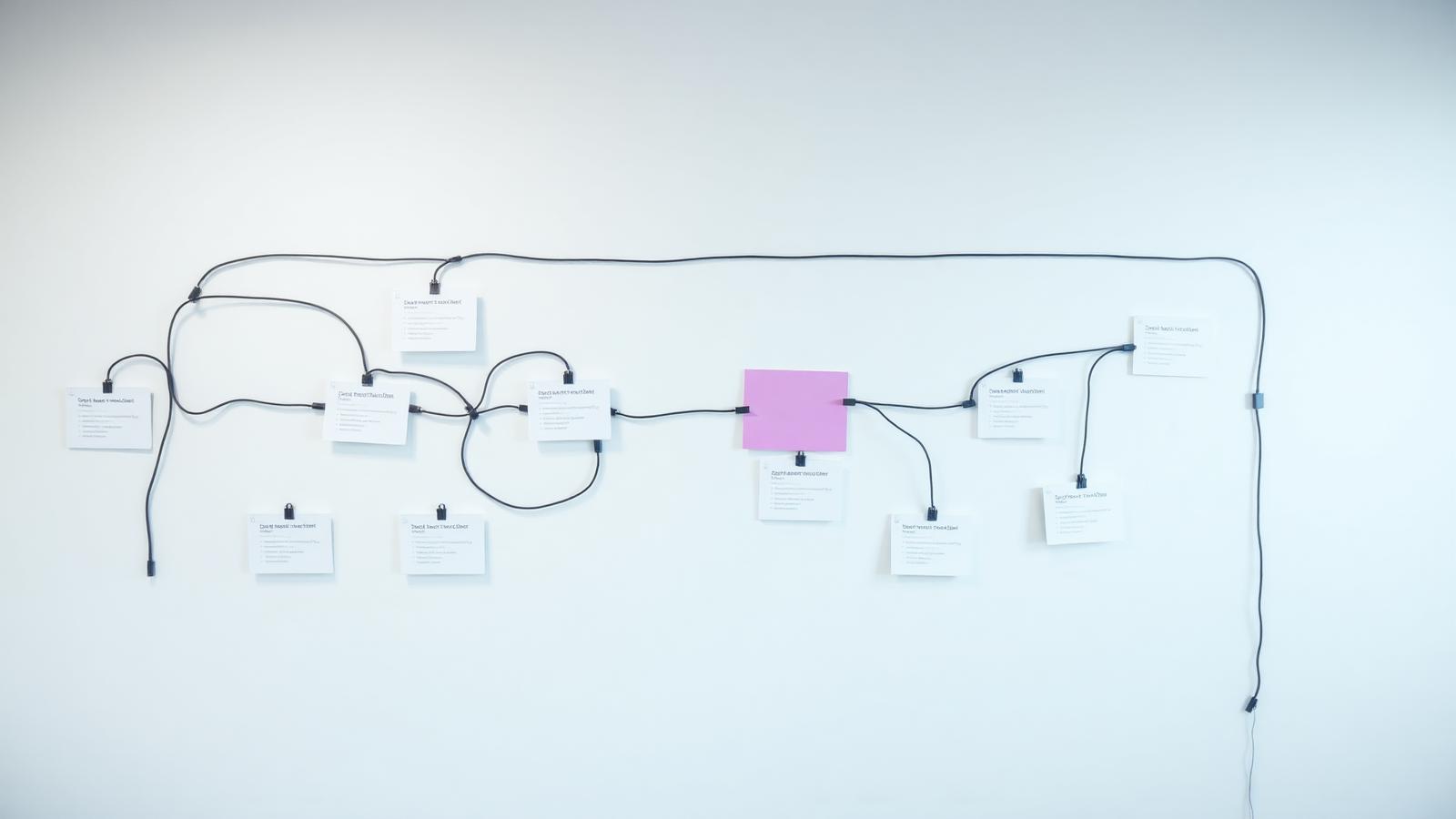
Agencies productize AI marketing operations by turning a few repeatable workflows into named, fixed-scope offers — not by selling AI hours.
Agencies productize AI marketing operations by turning a few repeatable workflows into named, fixed-scope offers — not by selling “AI hours.” Write the input, the output, the SOP, the SLA, and the human review gate before you sell the work. Price the package by scope and timeline, then measure the same outputs every cycle and tighten the SOP.
That is the difference between a tool stack and an offer. Clients buy a defined deliverable with a calendar. Operators keep the models inside a process they can run twice.
1. Pick repeatable workflows
Productize work that already happens every week with the same shape. Four agency workflows usually qualify:
- Reporting — pull the same sources, assemble the same narrative, ship on a standing day.
- Creative variation — brief, generate, select, and export image or short-form variants for paid social.
- SEO and content operations — brief, draft, edit, schema, internal links, and publish against a queue.
- Lead routing — capture, qualify, write to the CRM, and hand a hot record to a calendar or inbox.
Skip work that is unique every time: net-new positioning, a one-off brand system, or a custom application. Those stay scoped projects. If you cannot write the input and output on one page, it is not ready to productize.
2. Standardize inputs, outputs, and SOPs
An offer is a contract between a form and a file. Write both before you name a price.
Inputs should be a short intake: brand URL, offer, audience, source accounts, and the systems the work must write to (CRM, ad account, CMS). Reject a kickoff that is missing those fields instead of “figuring it out in week two.”
Outputs should be countable: a report with named sections, a set of finished ads, a published page with schema, or a live routing rule. “Better AI usage” is not an output.
SOPs should name the operator, the model or tool class, the prompt or checklist, and the definition of done. The SOP is what you sell again. The model is a step inside it.
3. Package as fixed-scope offers with deliverables and SLAs
Give the offer a name, a duration, a deliverable list, and a response rule. EVKII already sells that shape as Productized launches on the launch package page:
- Website Launch System — $5,000, 4 weeks, 50% reservation deposit. Up to six conversion pages, brand direction, AI imagery, two short-form videos, tracking, and CRM or booking integration.
- Lead Gen Sprint — $3,500, 2 weeks, 50% deposit. One landing page, offer refinement, tracking, CRM routing, and Google Search or Meta campaign setup on an existing site.
- Creative Growth Sprint — $3,500, 2 weeks, 50% deposit. Creative direction, AI image concepts, finished image ads, UGC-style scripts, and short-form cuts for Meta, TikTok, and Shorts.
- Full Growth Launch — $9,000, 4 weeks, 50% deposit. Website Launch System plus Meta Ads Launch and email/SMS flow setup as one relaunch.
- 90-Day Managed Growth — quoted in writing on a fit call. Senior operators running paid media, creative iteration, and lead follow-up as one system. No online checkout.
Those prices and timelines are the published catalog, not a performance promise. Copy the pattern for your own AI ops SKUs: name, duration, deposit or start rule, and a list a client can check off.
An SLA in this context is operational, not a ranking or revenue guarantee. Examples that belong on the one-pager: kickoff within a stated number of business days after deposit, a weekly working session, and a named delivery date for the first shippable artifact.
4. Instrument with human review and QA gates
Automation without a gate is a draft that can spend money. Put a person between the model and anything that publishes, buys, or mutates a live record.
Useful gates:
- Creative — a human accepts hooks and final cuts before they enter an ad account.
- SEO / content — an editor accepts facts, links, and schema before index.
- Lead routing — an operator tests one live submission before the rule is on for every lead.
- Reporting — an analyst accepts the narrative before the client sees the file.
Write the gate into the SOP as a checkbox, not a vibe. If the offer has no named reviewer, you are selling unattended generation. For the gate that decides what not to run before a model spends, see Jev’s AI usage gate.
5. Price by outcome tier and scope, not hours
Hourly AI retainers hide the work and train clients to buy time. Productized ops should have tiers that change scope, not the hourly rate:
- Tier 1 — one workflow, one channel or one property, a short calendar (the sprint shape).
- Tier 2 — the same workflow plus a second surface (site + paid, or creative + routing).
- Tier 3 — a bundled launch or a quoted managed period.
EVKII’s catalog follows that ladder: two-week sprints, a four-week website or full-growth launch, then a quoted 90-day managed program. Deposit is 50% to reserve the slot; the rest of the commercial terms live in the services agreement on the launch page.
Do not attach invented ROI, guaranteed CPA, or “X% faster” claims to the tier names. The price is for the listed deliverables.
6. Measure and iterate
Measure the offer the same way you sold it. If you sold six pages, count pages accepted. If you sold routing, count test submissions that landed in the right inbox. If you sold creative, count finished assets that cleared the QA gate and entered a campaign.
Keep an internal change log: which intake field was missing, which SOP step failed review, which output the client asked to redo. The next version of the offer should change the SOP or the scope list — not the pitch.
When a workflow stops fitting the box, stop forcing it into the SKU. Send it to a custom scope on services or a strategy call. Productized AI ops only stay productized if you refuse the exceptions that blow the calendar.
A one-page offer checklist
Before you publish a new AI ops SKU, you should be able to fill this without marketing language:
- Workflow name (reporting, creative variation, SEO/content ops, or lead routing).
- Required intake fields.
- Countable outputs and a delivery week.
- SOP owner and tool/model class.
- Human QA gate and what “accept” means.
- Price, deposit, and what happens if the intake is incomplete.
- The metric you will review at the end of the cycle.
If any line is blank, the offer is still a project. Finish the sheet, then put it on a page with a canonical URL so buyers and answer engines can cite the same scope you sell.
FAQ
What does it mean to productize AI marketing operations?
It means turning repeatable AI-assisted workflows into a named offer with a defined input, output, timeline, and review gate — sold as a fixed scope instead of open-ended hours. See EVKII’s published launch packages and the services hub.
Which workflows should agencies productize first?
Start with work that already repeats weekly: reporting, creative variation, SEO or content operations, and lead routing. If the input and output can be written as a checklist, the workflow is a candidate.
How should a productized AI ops offer be priced?
Price by outcome tier and scope — pages, assets, channels, weeks — not hours. EVKII publishes Website Launch System at $5,000 / 4 weeks, Lead Gen Sprint and Creative Growth Sprint at $3,500 / 2 weeks, and Full Growth Launch at $9,000 / 4 weeks, each with a 50% deposit.
Where do human review gates belong?
Anywhere an AI output can publish, spend, or change a client record. Automation drafts; a named person accepts.
How does EVKII package productized launch work?
Fixed-scope launches live under Productized launches on /services and are sold on /launch-package. 90-Day Managed Growth is quoted, not checked out online.
What does it mean to productize AI marketing operations?
It means turning repeatable AI-assisted workflows into a named offer with a defined input, output, timeline, and review gate — sold as a fixed scope instead of open-ended hours. EVKII publishes those scopes on the launch package page and the services hub.
Which workflows should agencies productize first?
Start with work that already repeats weekly: reporting, creative variation, SEO or content operations, and lead routing. If the input and output can be written as a checklist, the workflow is a candidate. Vague strategy retainers usually are not.
How should a productized AI ops offer be priced?
Price by outcome tier and scope — pages shipped, assets delivered, channels launched, weeks on the calendar — not by hours. EVKII’s published productized launches use that model: Website Launch System at $5,000 over 4 weeks, Lead Gen Sprint and Creative Growth Sprint at $3,500 over 2 weeks, and Full Growth Launch at $9,000 over 4 weeks, each with a 50% reservation deposit.
Where do human review gates belong in an automated marketing workflow?
Put a named human check anywhere an AI output can publish, spend, or change a client record: before ads go live, before CRM routing is flipped on, before SEO or content is indexed, and before a report is sent. Automation should draft and assemble; a person should accept.
How does EVKII package productized launch work?
EVKII lists fixed-scope launches on the services hub under Productized launches and sells them on the launch package page. Website Launch System, Lead Gen Sprint, Creative Growth Sprint, and Full Growth Launch have published prices and timelines. 90-Day Managed Growth is quoted in writing on a fit call.
Apply for the free 10-page website · Request a 15-minute teardown