UGC Video Ads: How to Produce Them at Scale Without Sacrificing Performance
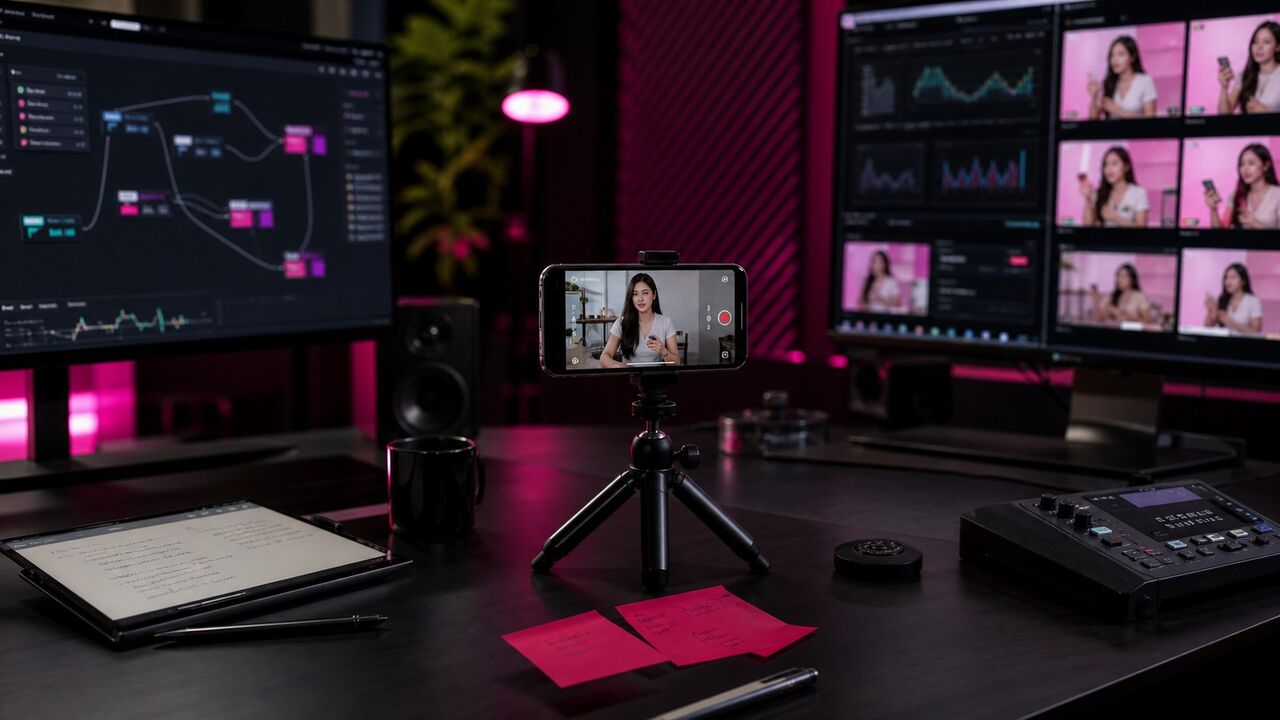
How to brief, produce, and scale UGC video ads on Meta and TikTok — including AI-generated UGC that actually converts.
UGC video ads — user-generated content style video produced for paid media — have been the highest-converting ad format on Meta and TikTok for three years running. In 2026, the brands winning with UGC aren't necessarily working with more creators. They're working with better systems, sharper briefs, and increasingly with AI-generated UGC that's getting hard to tell from the real thing.
Why UGC video ads still win in 2026
Three reasons that haven't changed:
- They feel native to the feed. A studio ad signals "skip"; a face-to-camera testimonial signals "watch."
- They lower CPM. Meta and TikTok algorithms reward content that looks organic with cheaper distribution.
- They build trust faster. A real person making a specific claim outperforms a brand making a polished one.
What has changed: production cost. UGC used to mean negotiating with 20 creators, shipping product, waiting 3 weeks, and getting back footage you couldn't fully control. In 2026, the best brands run a hybrid — real creators for hero pieces, AI-generated UGC for testing volume.
What a high-performing UGC video ad looks like
The structure that wins on cold traffic is consistent across categories:
- Hook (0–3s) — pattern interrupt, contrarian claim, or visual surprise. "I stopped using [category] for 30 days and this happened…"
- Problem (3–8s) — specific pain point, named in the customer's words
- Product reveal (8–14s) — natural in-frame, not a logo lockup
- Proof (14–22s) — visible result, before/after, or specific stat
- CTA (22–30s) — single, clear, with urgency. "Tap below to try it. Link in my bio."
Three things to avoid: don't open with the brand logo, don't use a script that sounds written, don't end with a 4-second brand bumper.
Briefing creators (or AI) so the output actually performs
Most UGC underperforms because the brief is wrong. The brief should specify:
- One hook concept (not "any of these 5") with the exact opening line
- One core claim the creator must make on camera, in their own words
- Format constraints — vertical 9:16, 30 seconds, captions burned in, no music or royalty-free only
- Examples of what good looks like — 2–3 reference videos, ideally yours that have already performed
- One CTA — exact wording
A good brief is one page. A bad brief is a 4-page Notion doc with brand guidelines, which produces inconsistent and over-polished output.
AI-generated UGC: where it works and where it doesn't
In 2026, AI video models can generate face-to-camera testimonials that pass casual scrutiny on a feed. The current state:
Where AI UGC works:
- Top-of-funnel testing — ship 20 hook variants in a week to find what resonates
- Categories where the creator's identity isn't load-bearing (commodity products, broad benefits)
- B2B and SaaS where the "creator" is a stand-in voice rather than an aspirational persona
- Augmenting real creator footage — extending B-roll, generating product close-ups, creating multilingual versions
Where AI UGC still falls short:
- Categories where authenticity is the product (skincare results, fitness transformations, food)
- Long-form testimonials over 45 seconds (consistency breaks down)
- Anything where the creator needs to demonstrate physical interaction with product (uncanny hand movements remain a tell)
- Markets where AI disclosure laws apply (always check local rules — FTC in the US has been increasingly active here)
Production system that scales
The brands shipping 30+ UGC variants per month don't have 30 creators. They have a system:
- Creator pool: 5–8 retained creators paired to your top personas. Ship 2 briefs per creator per month
- AI augmentation: Use real creator footage as the base. Extend B-roll, generate product shots, create localized voiceovers
- Editor pod: 1 editor producing 8–12 final variants per week from raw footage, prioritizing different hook openings
- Testing budget: $30–50/day per ad set for 3–5 days, then scale winners or kill
Disclosure and platform compliance in 2026
Two rules to know:
- Meta and TikTok both require disclosure when content includes AI-generated audio or video that depicts a real person or could mislead. Most performance UGC isn't depicting real people, so the disclosure threshold is rarely hit — but tag it AI-generated in the platform tools to avoid algorithmic suppression
- FTC (US) requires endorsement disclosure for paid creators (#ad). This applies to real-creator UGC regardless of AI involvement
When in doubt, disclose. Cost is near zero; risk of an ad ban is real.
Common mistakes
- Treating one viral creator's video as the strategy. It's a data point. The system is what scales
- Polishing the edit too much. Studio-grade color grading on a "raw testimonial" reads as inauthentic and tanks performance
- Skipping captions. 85%+ of feed video is watched muted
- Running the same UGC for 60+ days. Creative fatigue on Meta typically hits at 14–28 days; refresh weekly
A 30-day rollout
- Week 1: Lock 2 creator briefs, sign 3 retained creators, generate 5 AI UGC test variants
- Week 2: Receive raw footage. Edit 12 final variants across different hooks
- Week 3: Launch with $50/day per ad set across 4 ad sets. Read results at 72 hours
- Week 4: Scale winners 2× per day, kill anything below 1% CTR, brief next round of variants
UGC video ads aren't going anywhere in 2026. The competitive advantage is no longer "we use UGC" — it's how fast you can iterate, and whether you've built a system that produces 30 thoughtful variants while your competitor is on their second.